
What is the best gravel for a driveway in Tennessee?
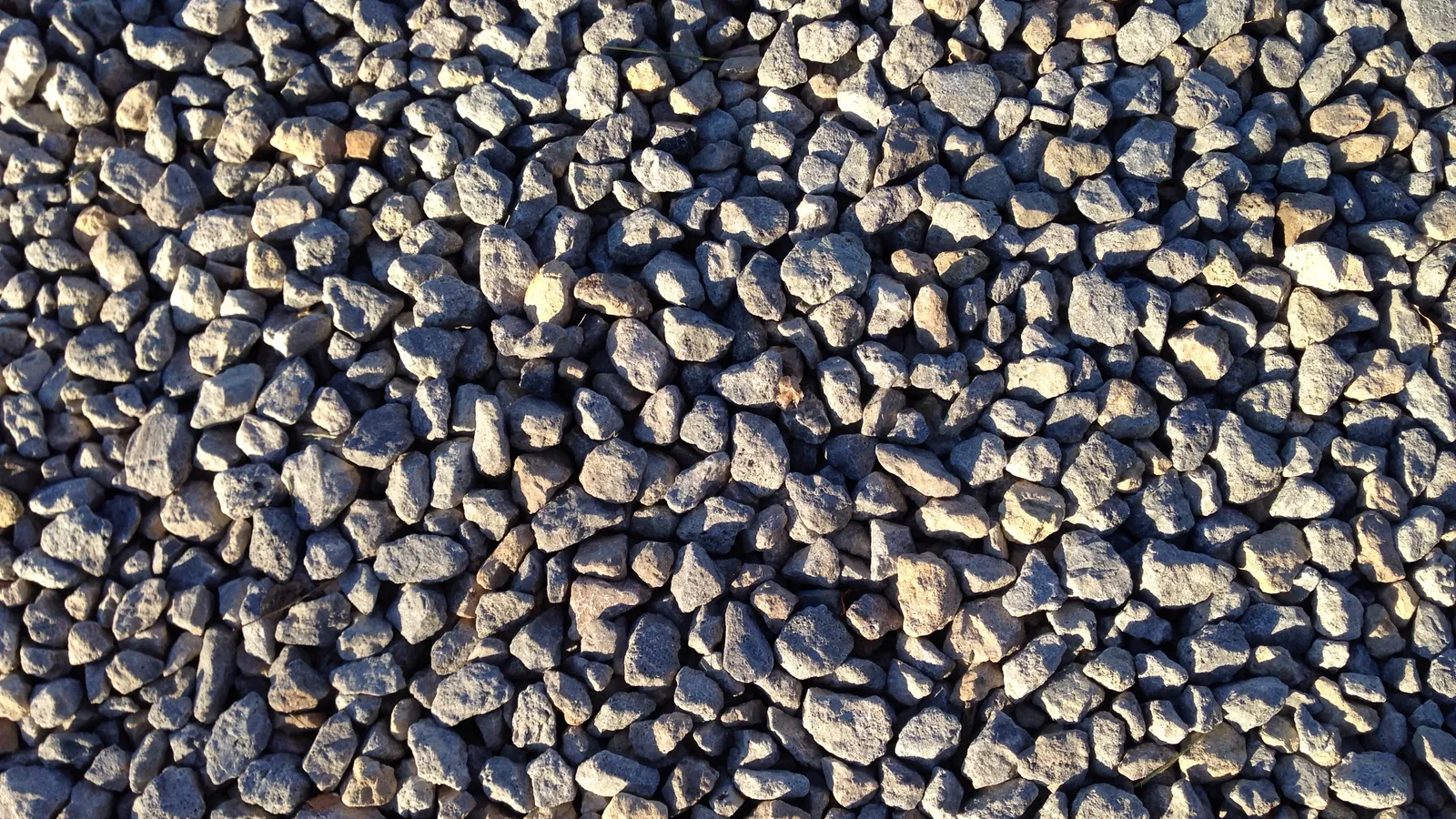
Angular crushed stone, with fines in the mix to bind it. HomeGuide’s pick is 3/4 to 1 inch crushed stone over a crusher run base. The federal gravel road guide adds that a surface needs binding fines to form a crust. Smooth pea gravel and river rock shift under tires and rut.
Fines are the dust in a load of gravel. Crusher run carries plenty of them, and clean crushed stone carries almost none. Which stone sits where decides how a drive holds up through Chattanooga’s rain.
Three Crosses Land Services does gravel driveway repair on drives and gravel roads that are already in place. A Harley rake on our mini skid steer pulls loose stone back in and fills the ruts. Then it resets the crown so water sheds. We do not sell or deliver gravel, and we do not build new driveways.
What are the main types of driveway gravel?
Driveway gravel comes down to four groups. Crusher run packs into a base, and crushed stone of one size makes the top layer. Rounded stone, like pea gravel and river rock, belongs off the driving surface. Big base stone goes at the very bottom.
Crusher run goes by many names. HomeGuide lists it as crush and run, crusher run, quarry process, #411 gravel, road stone or dense-grade aggregate. Around Chattanooga, a gravel delivery service’s local page lists 3/4 inch crushed stone, or #57, as a common driveway stone. The same page calls #411 a blend of stone and fines used as a compactable binder.
| Stone | What it is | Where it goes | Published price per ton | Source |
|---|---|---|---|---|
| Crusher run (crush and run, quarry process, #411) | Crushed stone, sand and stone dust, from dust up to 1 inch | Base layer, 3 to 4 inches | $25 to $50 delivered | HomeGuide |
| 3/4 to 1 inch crushed stone, often sold as #57 | Angular rock crushed to one uniform size | Top layer, 2 to 3 inches | $30 to $60 delivered | HomeGuide |
| Pea gravel | Smooth, rounded stone, generally 3/8 inch | Walkways and landscaping | $50 to $100 delivered | HomeGuide |
| River rock | Larger smooth stone, tumbled by water | Landscaping accents and drainage areas | $60 to $150 delivered | HomeGuide |
| #3 stone (SB2) | Sub-base stone, 3 to 4 inches | Sub-base, below the other layers | $30 to $33, on orders of 17.5 tons or more | HomeGuide |
These are HomeGuide’s published national ranges, not our price list. Full driveway prices are in our gravel driveway cost guide. When you call a quarry, ask for the size in inches along with the number.
Crusher run or #57 stone: which one goes on a driveway?
Usually both, in two layers. HomeGuide’s recipe puts crusher run in the base and crushed stone on top. Crusher run’s mix of sizes, from dust to 1 inch, packs the hardest. The 3/4 to 1 inch stone on top gives traction.
Fines are what hold a gravel surface together. The Federal Highway Administration’s gravel road guide says good gravel blends stone, sand and fines. The stone should be fractured, and the fines should bind. That kind of gravel resists washboarding.
A South Dakota test in that guide shows the difference. One section used gravel with only a top size limit. All of it passed a 1 inch sieve, and nothing controlled the fines. A year after it was built, that section held 405 tons of loose stone per mile.
Gravel that met the state spec, near its minimum for fines, held 211 tons. A mix with the most fines the spec allows held 71 tons. After 3 years, the first section was virtually impossible to maintain. The high fines mix needed up to 75 percent less blade work and never washboarded.
That is the catch with a clean stone top. The federal guide says base stone, with very few fines, will not form a crust when used as a surface. Some loose stone, called float, sits on virtually every gravel road. Loose stone is a major cause of washboard.
So keep the clean stone thin, at HomeGuide’s 2 to 3 inches, over a base that binds. Where loose stone and washboard are the problem, the federal guide points to a surface with binding fines.
Why does pea gravel rut on a driveway?
Round stones roll instead of locking. HomeGuide says smooth, rounded stone like pea gravel and river rock does not compact well. It shifts under vehicle weight and leaves ruts and uneven spots. HomeGuide’s advice is to keep both off the main driving surface.
The federal guide explains the shape problem. Broken stones embed into a gravel surface much better than rounded, natural-shaped stone. Fractured stone also resists movement under loads. Quarry gravels are often very good material, since nearly every piece is fractured.
Pea gravel still has a place. HomeGuide rates it best for walkways and landscaping rather than driveways, and it lists pea gravel as generally 3/8 inch. River rock works better as an accent or in drainage areas.
Size cuts the other way too. HomeGuide says to avoid gravel larger than 2 inches on a driveway surface. Oversized stone makes driving uncomfortable and scatters outside the drive. Big #3 stone belongs at the very bottom, under the layers that pack.
How deep should driveway gravel be, and how many tons does it take?
At least 5 to 6 inches, base and top layer together, per HomeGuide. Drives that carry trucks or RVs should be 8 to 12 inches deep. Most installs split that into a 3 to 4 inch base and 2 to 3 inches of top stone.
For tonnage, HomeGuide’s rule is one ton for about 60 to 80 square feet at 4 inches deep. A drive 10 feet wide and 100 feet long is 1,000 square feet. HomeGuide puts that drive at about 13 to 17 tons at 4 inches. It also says to order 10 to 15 percent extra for compaction, spillage and settling.
With the extra, that 1,000 square foot drive comes to about 14 to 20 tons. A 2 inch top layer takes about half the 4 inch amount. That is roughly 6 to 8 tons before the extra. On a repair, the estimate does this math for your drive and says which stone it needs.
What changes the answer around Chattanooga?
Water and red clay. NOAA’s 1991 to 2020 normals put the Chattanooga airport at about 55 inches of rain a year. Red clay under the stone holds that water. Stone that locks together and a base that binds hold up best on it.
Shape matters as much as the stone. The federal guide recommends about 1/2 inch of crown per foot, roughly 4 percent. On a 10 foot wide drive, the middle sits about 2.5 inches above the edges. Rain then runs to the shoulders instead of standing in the tracks.
Where runoff crosses the drive, the fix is in the ground around it. French drains and yard drainage carry that water to a lower spot. Drives worn down to bare clay need new stone added before a regrade will hold.
Getting the right stone on your drive
The right stone starts with what is already there. On a worn drive, much of the gravel sits in the shoulders and the ditch line. The Harley rake is built for loose stone, so it pulls that gravel back in first. If brush has grown over the shoulders of a long drive, brush clearing opens them back up.
The free estimate starts with someone looking at the drive. It says whether a regrade alone will hold, or which stone to add and how much. The stone itself comes from a local quarry or hauler. A photo taken the day after a hard rain shows where water stands.
Three Crosses Land Services is a veteran-owned family business based just north of Chattanooga, TN. We are licensed and insured, and we cover Chattanooga, Southeast Tennessee and Northwest Georgia. To get a worn gravel drive graded back into shape, call or text (423) 260-5675.